Why are wood and fabric such strong choices for pretend play toys? The question “what materials are best for pretend play toys” deserves more than a quick claim that natural materials are always better. Children need objects they can carry, arrange, and transform: a wooden bowl becomes a shop counter, while a soft fabric square becomes a blanket, cape, or picnic cloth. The details invite play. Warm wood grain feels different from smooth plastic, and cloth folds easily into new shapes. Small sensory cues can help a simple toy feel full of possibility.
Child-development expert and television host Fred Rogers once said, “Play is often talked about as if it were a relief from serious learning. But for children, play is serious learning.” That idea helps explain why material choice matters: sturdy wooden pieces and washable fabric props can support repeated, open-ended play without dictating one story. Wood can offer satisfying weight and durability; fabric is light, quiet, and easy to gather into a basket. Both have limits. Wood may be heavy or splinter if poorly finished, and fabric can fray or require frequent washing. No material is perfect. Look for smooth edges, secure seams, and age-appropriate designs, then notice what children actually choose. Their play may surprise you.
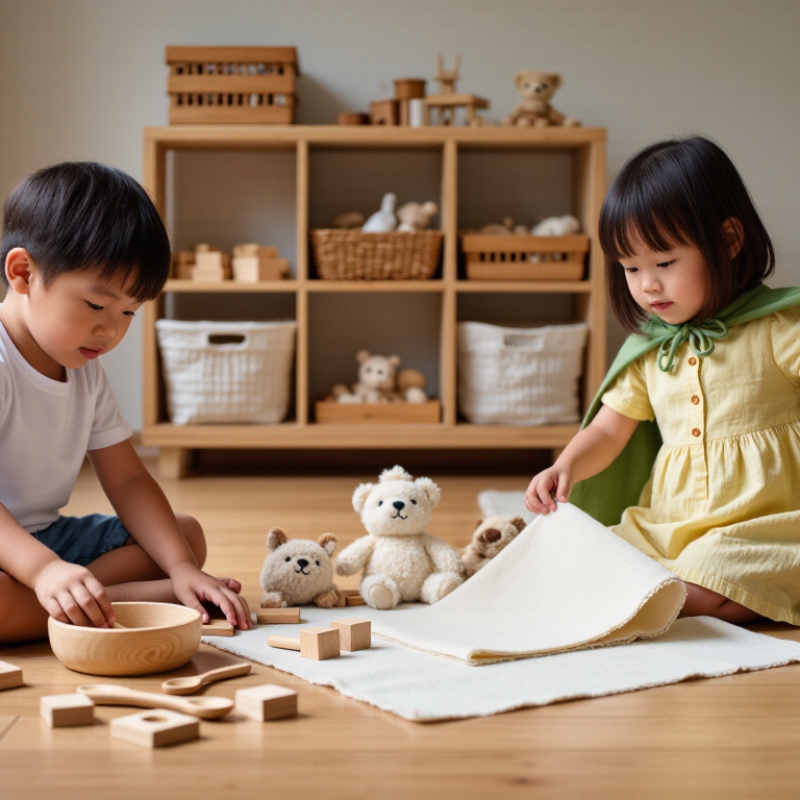
Wood gives pretend play toys a firm shape. A small wooden stove, spoon, or set of play vegetables can stand on a table and withstand repeated handling. Smooth edges and a stable base matter more than fine decoration. Children can arrange the pieces, serve an imaginary meal, and put everything away without needing a screen or instructions. Keep wooden parts clean and dry; rough surfaces or loose pieces should be checked before play.
Fabric is useful where toys need to bend, wrap, or feel soft. A cotton doll blanket can become a picnic cloth, while a simple fabric bag may hold pretend groceries. Capes, aprons, and play tents invite movement and role changes. They are light to carry, but seams can loosen with frequent tugging. Washable fabric is practical. Still, it may fade or shrink, so care instructions deserve attention.
The materials can work together. A wooden market stall paired with cloth bags feels more varied than either material alone. Texture adds cues: a smooth wooden cup feels different from a crinkled fabric parcel. Not every child responds to these details, though. Some prefer a few familiar pieces, and a crowded toy set can distract from the play itself.
Wood and fabric offer different sensory cues during pretend play. A wooden spoon feels firm, cool, and slightly weighty in a child’s hand. Its smooth grain can invite tracing, tapping, and careful comparison with a real kitchen tool. Fabric behaves differently. A soft scarf folds, drapes, and gathers, becoming a blanket, a cape, or a market stall with a small change in movement.
These materials also make play feel more open-ended. A child can hear a quiet wooden clack when blocks meet, then notice how cloth muffles the sound. Such contrasts give children concrete details to explore while they invent stories. The objects do not need lights or scripted sounds to hold attention. Sometimes, a scrap of fabric is enough.
There are trade-offs. Wood can feel hard or heavy, and some children may prefer lighter toys. Fabric can collect dust, stain, or lose its shape after frequent washing. Check for smooth edges, secure parts, and washable care instructions suited to the child’s age and play habits. I have also noticed that a familiar texture may comfort one child and bother another. That is worth watching. Let children handle materials at their own pace, and offer choices rather than assuming every natural texture feels pleasant.
Why Are Wood and Fabric Best for Pretend Play Toys?
How Simple Materials Encourage Imaginative Play
A wooden block can become a loaf of bread, a bus, or a tiny bed. A soft fabric square can turn into a cape, picnic blanket, or shop curtain. These materials offer few fixed instructions, so children supply the story themselves. They can stack, drape, fold, and rearrange them as play changes. The feel matters, too: smooth edges, woven texture, and the gentle thud of blocks give children concrete details to explore. Simple does not mean effortless; a child may need time and space before an idea takes shape.
The American Academy of Pediatrics’ 2018 clinical report, “The Power of Play,” describes play as supporting language, social-emotional skills, and executive function. The Common Sense Census: Media Use by Kids Age Zero to Eight (2020) reported an average of 2 hours and 24 minutes of daily screen-media use among U.S. children in that age group. That figure measures media habits; it does not prove wooden or fabric toys are better. Still, open-ended objects offer a hands-on option. And they can be ignored. A toy’s material alone cannot guarantee imaginative play.
Tips: Offer a few blocks, fabric pieces, and a small basket. Leave them within reach, then watch before suggesting a story. If play stalls, ask, “What could this cloth become?” Don’t rush to fix the scene.
Why Are Wood and Fabric Best for Pretend Play Toys?
Durability, Repair, and Environmental Considerations
Wood and fabric can handle repeated play, but neither is indestructible. A wooden toy may survive years of pretend cooking, though corners can chip after hard falls. Fabric food and dolls bend, get carried around, and fit easily into small storage baskets. They feel inviting, too. That matters during play.
Damage is often visible and manageable. Check wooden pieces for splinters or loose joints, and smooth small rough spots only when repair is appropriate. A torn fabric seam may be easy to stitch, while removable fabric pieces can sometimes be washed according to their care instructions. Not every repair lasts. If a toy has damaged parts that could come loose, set it aside until fixed.
Environmental impact depends on how materials are sourced, made, and used. A sturdy toy that stays in play for years may need replacing less often, but wood and cloth are not automatically sustainable. Look for clear material information, durable construction, and finishes suited to children’s toys. Natural fibers can still require water and processing, and wood products vary in origin. A little wear is normal. Some stains may remain, and that is not always a reason to discard a well-loved toy.
For babies and young toddlers, choose large, simple pieces that are easy to grasp and have no detachable small parts. A smooth wooden cup or a soft fabric animal can invite imitation without requiring complicated play. Check seams, painted surfaces, and wooden edges regularly; toys get dropped, chewed, and dragged across the floor. Follow the maker’s age guidance, and supervise play, especially when a child still mouths objects. Keep it simple. A busy toy may hold attention briefly, but it can also frustrate a child who is still learning to handle objects.
Around ages three to five, children often enjoy toys that support longer pretend scenarios: wooden food, cloth bags, dolls, or fabric capes. Offer a few pieces at a time, then let the child decide whether the bag becomes a picnic basket or a doctor’s kit. Older preschoolers may enjoy smaller accessories and more detailed roles, provided the pieces suit their abilities and are checked for wear. Age ranges are only a guide; siblings develop differently, and I would not treat a birthday as proof that every small accessory is ready. Wash fabric items according to their care instructions, and inspect wooden toys for splinters or loose parts. Some favorite toys will look worn. That matters. A quick check helps distinguish harmless scuffs from damage that calls for putting the toy aside.
Wooden cups, play food, and small stoves keep their shape on a table. Smooth edges and a steady base matter. Check for splinters or loose parts.
A cloth bag can hold pretend groceries, while a blanket can become a picnic cloth. Fabric is light to carry, but seams may loosen. Check them.
Yes. A wooden market stall and soft cloth bags offer different textures and play options. Some children may ignore the details, though.
Choose large, simple pieces, such as a smooth wooden cup or soft fabric animal. Avoid detachable small parts, and supervise children who mouth toys. Keep it simple.
Wooden food, cloth bags, dolls, and capes can support longer pretend scenarios. Offer a few pieces, then let the child decide what they become.
No. Children develop differently, even within the same family. Check whether each piece fits the child’s abilities; a birthday alone tells you little.
Inspect wooden edges for splinters and fabric seams for loose stitching. Wash fabric according to its care instructions, and keep wooden parts clean and dry.
Faded fabric or light scuffs may not mean a toy is damaged. Loose parts or rough edges deserve attention. I might still miss something, so check again before play.
Wood and fabric are well suited to pretend play toys because they offer a pleasing mix of structure, softness, and sensory variety. Smooth wooden pieces feel solid in a child’s hands, while fabric adds warmth, texture, and flexibility. Together, these natural and soft materials invite children to touch, arrange, carry, and explore. When toys have simple shapes and no single fixed purpose, children can turn them into many things, creating their own stories and games. This helps explain what materials are best for pretend play toys: materials that feel engaging, support open-ended use, and leave room for imagination.
Well-made wooden and fabric toys can stand up to regular play, and simple designs are often easier to clean, mend, or pass along. Choosing durable materials may also reduce waste over time. The right toy depends on a child’s age and abilities: younger children benefit from sturdy, easy-to-hold pieces, while older children may enjoy more detailed accessories for elaborate role-play. Across ages, safe construction and age-appropriate design help make pretend play enjoyable and lasting.

Angeles Toys