Why are pretend play toys important for children? A wooden spoon becomes a microphone. A cardboard box becomes a shop, spaceship, or quiet hideout. In these small scenes, children practice turning ideas into actions. Pretend play toys can give them simple props for storytelling, role-play, and shared games. The toy itself does not need to be elaborate. Sometimes, an ordinary scarf invites more invention than a battery-powered set.
Child-development expert David Elkind wrote, “Play is not a luxury. Play is a necessity.” His words capture why imaginative play deserves room in a child’s day. When children take turns being customers and shopkeepers, they may practice conversation, negotiation, and flexible thinking. A toy doctor’s kit can also help a child act out a visit that feels unfamiliar. These moments are not formal lessons, and their benefits vary from child to child.
Adults can support play by offering open-ended toys, listening, and letting children guide the story. Still, it is easy to over-direct. Asking too many questions or correcting every detail may interrupt a child’s idea. Not every child enjoys pretend play in the same way, either. Some prefer building, drawing, or watching before joining in. A thoughtful choice starts with the child’s interests, not a crowded toy shelf.
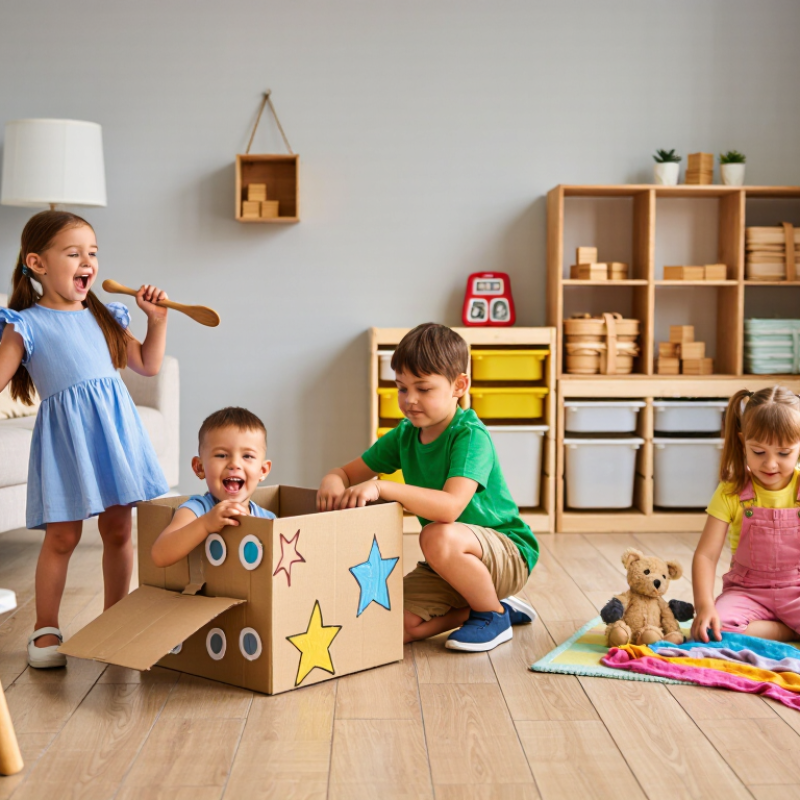
Pretend-play toys are objects children use to act out familiar or imagined roles. A wooden spoon becomes a microphone; a blanket turns into a tent. Costumes, toy food, dolls, animal figures, and safe household props can all invite make-believe. The toy does not need to perform every action. An open-ended object often leaves more room for a child’s ideas. That is the point.
Children use these materials to build small scenes: serving pretend soup, caring for a doll, or running a make-believe shop. They may copy routines they have seen, change details, and give characters different voices. A cardboard box might become a bus one day and a shop the next. Play can be quiet or energetic, solitary or shared. Adults can follow the child’s lead, ask a gentle question, and let the story continue without correcting every detail. Sometimes the scene falls apart. That is normal, too.
Tips: Offer a few safe, familiar props and leave them within reach. Rotate items when interest fades, rather than adding more toys. Watch for small parts around young children, and supervise age-appropriate play. Notice what the child is exploring, but avoid turning every game into a lesson.
When a child turns a cardboard box into a bus, pretend play is doing more than filling a quiet afternoon. The box stands for something else, and the child must hold that idea in mind. A cushion becomes a hill. A wooden block becomes a phone. These small substitutions exercise symbolic thinking: children connect objects, actions, and meanings in flexible ways.
Play also gives children a reason to use language. A child might announce, “The bus is late,” then explain where it is going. They practice naming, describing, asking questions, and arranging events in sequence.
A caregiver can join without taking over: “Who’s waiting at the stop?”
A pause can help, too. Children need room to invent their own replies, even when the story wanders or makes little sense to adults.
Pretend play can also reveal how children are working through ideas. A toy animal may visit a pretend doctor, while a child narrates each step. Listening closely offers clues about the words and stories they can manage today.
Not every play session will be rich or cooperative; sometimes the bus crashes, and the game ends. That is part of play, not a lesson that needs correcting.
A cardboard box can become a bus, a clinic, or a tiny shop before lunch. When children take turns being the driver and passenger, they practice listening, waiting, and changing plans. A toy phone gives them a reason to ask questions, answer politely, and notice how another person feels. These small exchanges make social skills visible. They also offer a safe way to try out emotions. A child might give a doll a blanket after it “gets hurt,” or use a firm voice to play the doctor. The story is pretend, but the feelings can be real.
During role-play, children often negotiate rules: who gets the red cup, whether the bear can join, and what happens next. That back-and-forth can help them name frustration and practice compromise, though it rarely looks tidy. It takes practice. Sometimes one child controls the whole game. An adult can model a question—“What should we do if the customer is sad?”—then leave room for children to answer. Too much direction may turn play into a lesson, and adults can get that balance wrong. That matters. Watching quietly is useful, too. If a game ends in an argument, a calm check-in can help children revisit what happened without insisting on a perfect ending.
Why Are Pretend Play Toys Important for Children?
How Pretend Play Encourages Creativity and Problem-Solving
A cardboard box can become a bus, a shop, or a cave. With a few blocks, a scarf, and toy food, children create settings and decide what happens next. They practice turning familiar objects into something new, which gives imagination a hands-on job. Plans change. A pretend customer may ask for soup when the toy kitchen has only wooden fruit. The child can invent a substitute, change the menu, or ask a playmate for an idea.
These small moments also invite problem-solving. Children make choices, test them, and adjust when a story stalls. Playing “restaurant” can involve sharing roles, counting pretend coins, and working out whose turn comes next. Adults can support the process by offering open questions, such as, “What could we use for a bridge?” Then wait. Too many suggestions can take over the story, even when they are well meant. Some play gets repetitive or messy, and not every game teaches a clear lesson. Still, a quiet pause often gives a child room to rethink a plan, negotiate a role, or build a new ending.
| Developmental area | Pretend-play example | How it can encourage creativity or problem-solving | What an adult may observe |
|---|---|---|---|
| Creative thinking | A child uses a cardboard box as a shop, spaceship, or animal shelter. | Everyday objects can take on new meanings, inviting children to imagine different settings, roles, and storylines. | The child invents uses for available materials and adds new details to a story. |
| Planning and sequencing | A child sets up a pretend restaurant, decides what is on the menu, and serves a meal. | The play involves choosing what to do first, organizing materials, and connecting actions in a sequence. | The child makes a plan, gathers props, and adjusts the steps as the game develops. |
| Problem-solving | A pretend bridge falls down while toy animals are crossing. | The child can test different building materials or designs and see which solution works within the play scenario. | The child tries another approach, changes the structure, or asks for help when needed. |
| Language and communication | Children act out a doctor’s visit, a grocery trip, or a family conversation. | Taking roles gives children opportunities to practice describing ideas, asking questions, and responding to others. | The child uses role-related words, explains what is happening, or negotiates what happens next. |
| Perspective-taking | A child pretends to be a teacher, caregiver, or shopkeeper. | Trying out different roles can help children consider what another person might know, need, or feel. | The child changes their words or actions to fit the role or responds to another player’s ideas. |
| Cooperation and negotiation | Two or more children decide who will play each character in a shared story. | Shared play creates chances to agree on roles, rules, and plot changes while keeping the game going. | The children take turns, share props, suggest compromises, or revise the story together. |
| Emotional expression | A child uses dolls or figures to act out starting school or visiting a new place. | Fictional characters can provide a comfortable way to explore situations and express ideas about feelings. | The child gives characters feelings, describes what they might need, or acts out possible responses. |
| Flexibility and persistence | A planned pretend adventure changes when a prop is missing or a new idea is introduced. | Children can practice adapting the story, making substitutions, and continuing after a small setback. | The child accepts a change, finds an alternative prop, or develops a new direction for the game. |
Note: These are examples of skills children may practice during pretend play, not guaranteed outcomes or a developmental assessment. Children’s interests and play styles vary.
Adults can make pretend play safer without directing every scene. Check toys for loose parts, sharp edges, and pieces that may be unsafe for a child’s age. Offer simple props, such as fabric, cardboard boxes, or chunky play food. Keep small objects away from children who still explore by mouthing things. Stay close.
Let the child decide whether the box is a bus, a shop, or a cave. Open questions like “What happens next?” invite storytelling without taking over. If a child assigns you a role, follow their lead, but keep real boundaries clear: pretend food stays out of mouths, and play tools are not for hitting. Adults can mistake quiet observation for doing nothing. Often, watching carefully is useful.
Pay attention to the child’s mood as well as the toys. A pretend scene may include a doctor visit, a storm, or a disagreement; these themes are not automatically a problem. If play becomes frightening or rough, pause and ask how the child feels. Offer another direction without shaming them. Children do not always explain what their stories mean, and adults can misread them. A calm check-in is often better than guessing.
Pretend play can give children opportunities to practice imagination, communication, and social interaction. Adults can support it by following the child’s lead, offering age-appropriate materials, and checking toys for small parts or other hazards. The chart shows selected CDC milestones—not a measure of toy effectiveness or a strict deadline; children develop at different rates.
Source: CDC Learn the Signs. Act Early. developmental milestones. CDC milestones describe skills most children (75% or more) can do by a given age.
They are objects children use to act out familiar or imagined roles. A wooden spoon can become a microphone.
Fabric, cardboard boxes, toy food, dolls, and animal figures can inspire small scenes. Keep items suitable for the child’s age.
No. Simple, open-ended objects often leave more room for children’s ideas. A box may become a bus today.
Follow the child’s lead and ask, “What happens next?” Avoid correcting every detail. Let the story change.
Check for loose parts and sharp edges. Keep small objects away from young children who may put them in their mouths.
Pretend food stays out of mouths, and play tools are not for hitting. Stay close.
Not automatically. Notice the child’s mood, and check in calmly if the scene becomes frightening or rough.
That can happen. Children may change the story, stop playing, or start again. Adults can misread what a scene means, too.
Pretend play toys give children simple ways to turn everyday objects and familiar situations into imaginative worlds. A toy kitchen, dress-up items, or even a cardboard box can become part of a story, helping children represent ideas through symbols and practice using new words. As they narrate their play, they build language, memory, and flexible thinking.
Taking on different roles also helps children explore feelings, understand other people’s perspectives, and learn to cooperate, share, and negotiate. When a story takes an unexpected turn, children can invent solutions and adapt their plans, strengthening creativity and problem-solving skills. Understanding why are pretend play toys important for children means recognizing that play supports more than entertainment: it offers valuable opportunities for learning and emotional growth. Adults can encourage meaningful play by providing safe, open-ended materials, listening to children’s ideas, and joining in when invited without taking over.

Angeles Toys