Top 10 Reasons Why Imaginative Play Matters for Child Growth?

Time:2026-10-05 Author:Oliver
0%

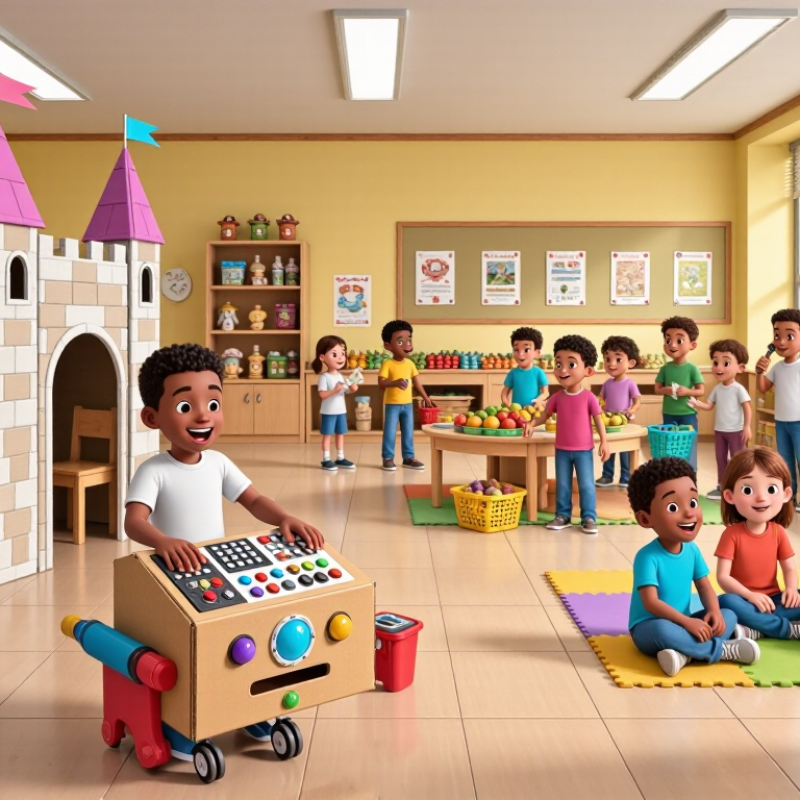
Why does a cardboard box become a spaceship, a blanket become a castle, and a wooden spoon become a microphone? These simple moments reveal why is imaginative play essential for child growth. Through pretend play, children test ideas, express feelings, and practice making decisions without facing real-world consequences. A child may become a doctor, shopkeeper, parent, or dragon. Each role offers a safe way to explore language, identity, empathy, and problem-solving.

The Top 10 Reasons Why Imaginative Play Matters for Child Growth examines these benefits through practical, developmentally informed examples. Educators and child-development professionals commonly connect imaginative play with communication, emotional regulation, flexible thinking, cooperation, and early planning skills. During a pretend grocery store game, children count objects, negotiate roles, remember rules, and respond when the “shop” runs out of apples. These small exchanges can support meaningful learning.

The details matter.

However, imaginative play is not a guaranteed solution for every developmental concern. Children differ in temperament, culture, interests, and support needs. Some prefer building quietly, while others invent loud, complex stories. Adults should guide gently, not control every plot. I have sometimes underestimated how much children learn from seemingly chaotic play. A closer look often shows careful observation, emotional rehearsal, or social experimentation. This article considers ten clear reasons imaginative play deserves space in homes, classrooms, and community settings, while recognizing that play works best when children feel safe, included, and free to create.
Top 10 Reasons Why Imaginative Play Matters for Child Growth?

What Imaginative Play Is and How Children Experience It

Imaginative play is a child’s way of turning ordinary objects into meaningful possibilities. A cardboard box may become a spaceship, shop, or hiding place. Rules can bend. A child might be a doctor in one moment and a worried patient in the next. This play is not simply pretending for entertainment. It helps children test ideas, emotions, and social roles in a safe setting.

Children experience imaginative play through movement, language, and sensory details. They may whisper to a stuffed animal, draw a map, or assign jobs to friends. While playing “home,” they copy familiar routines and explore relationships. While building a fantasy world, they practice planning and flexible thinking. Developmental specialists often connect this activity with communication, self-regulation, and problem-solving. Still, every child enters the experience differently. Some children speak loudly, while others create quietly with blocks.

Adults can support this play by offering open-ended materials and enough uninterrupted time. A wooden spoon can become a microphone. A blanket can become a mountain. Gentle questions, such as “What happens next?” may extend the story without controlling it. I have noticed that adults sometimes correct imaginary details too quickly. That can shrink the child’s idea before it develops. Yet complete adult distance is not always helpful either. A child may need reassurance, a new word, or help solving a conflict. The balance is difficult, and adults will not always get it right.

How Pretend Play Builds Thinking, Creativity, and Problem-Solving Skills

On a rainy afternoon, a cardboard box can become a spaceship. A child assigns roles, negotiates rules, and repairs the mission after it fails. These small decisions exercise working memory, flexible thinking, and language. Developmental research links pretend play with stronger self-regulation and problem-solving. Play is not merely entertainment. It is a rehearsal space for thinking.

When children pretend to run a shop, they count coins, compare sizes, and explain choices. If a tower collapses, they test a wider base or change the plan. I have seen quiet children speak more freely through a puppet than during direct questions. That moment matters. Imagination gives abstract ideas a physical shape. It also builds creativity by allowing several answers to one problem. Adults can support this process with open-ended materials, gentle questions, and time.

Still, pretend play is not a magic shortcut. Some children need invitations, while others need less adult direction. Too many rules can shrink the creativity we hope to encourage. An adult might ask, “What could happen next?” and then listen. That balance is harder than it sounds. Children may argue, repeat ideas, or abandon a game quickly. Those imperfect moments still offer practice in patience, perspective-taking, and revising plans. Occasionally, the best teaching move is stepping back.

How Imaginative Play Supports Language, Communication, and Social Learning

Imaginative play gives children a safe rehearsal space for language and social life. A cardboard box becomes a bus, shop, or rocket. Children name roles, explain rules, and negotiate who drives. These exchanges build vocabulary and flexible communication. A quiet child may speak more freely through a puppet than during a direct question. That detail matters. Adults should listen for meaning, not only correct grammar. In early-childhood settings, observation often reveals language growing during play rather than after a worksheet.

Play also teaches children to read other minds. “The customer looks worried,” one child might say, changing the game’s direction. Such moments support empathy, turn-taking, and perspective-taking. Children practice asking, clarifying, disagreeing, and repairing misunderstandings. These are social skills with daily value. Not every play session is peaceful. Good. Conflict can expose gaps in language. An adult can model, “Can I have a turn after you?” without taking control. Research-informed practice favors open-ended materials because they invite children to invent meanings, not merely follow instructions.

Still, imaginative play is not automatically inclusive. Some children need visual prompts, extra time, or a partner who welcomes their ideas. I have sometimes mistaken silence for disinterest. That was a poor assumption. Careful observation corrects it. Educators can add story cards, familiar objects, or new vocabulary, then step back. Too much adult direction can flatten the conversation. Too little support can leave a child outside it. The useful balance keeps changing when children bring different languages, cultures, and communication styles into the same pretend world.

How Role-Playing Strengthens Emotional Growth, Empathy, and Self-Regulation

Top 10 Reasons Why Imaginative Play Matters for Child Growth

Role-playing gives children a safe rehearsal space for real emotions. A child pretending to run a clinic may comfort a “patient,” negotiate turns, and practise gentle language. These small scenes strengthen empathy because children shift between different viewpoints. The American Academy of Pediatrics’ 2018 clinical report connects play with social-emotional development, language, and executive function. These skills support attention, flexible thinking, and self-control.

Pretend play also makes regulation visible. A child may pause, breathe, and change the story after a toy “gets hurt.” Adults can model words such as “You feel worried” or “Let’s try again.” The Harvard Center on the Developing Child describes these responsive interactions as building core capabilities through repeated practice. UNICEF reported that about 175 million children worldwide lacked access to pre-primary education in its 2019 early-learning report. Home play therefore matters, although it cannot replace quality early education.

Evidence needs honesty. A major review by Lillard and colleagues in Psychological Bulletin examined 154 studies and found strong associations, but limited proof that pretend play alone causes every benefit. That caution is useful. Adults should observe, not control every storyline. Ask one curious question. Then wait. Children may invent messy solutions, and adults may misread them. That is part of the learning.

Top 10 Reasons Why Imaginative Play Matters for Child Growth

How role-playing supports emotional growth, empathy, and self-regulation

The chart presents an evidence-informed strength rating for developmental links commonly identified in research on pretend play. A rating of 3 indicates strong and consistent support, 2 indicates moderate support, and 1 indicates emerging support. These ratings are not effect sizes or population percentages.

The evidence base includes research and professional guidance on play, executive function, social understanding, emotional development, language, creativity, and self-regulation, including work published by the American Academy of Pediatrics, the National Association for the Education of Young Children, and peer-reviewed developmental psychology researchers.

How Families and Educators Can Encourage Meaningful Imaginative Play

Families and educators shape imaginative play through the space and attention they provide. A cardboard box can become a bus, shop, or quiet reading cave. Children practise language, negotiation, and flexible thinking while playing these roles. Developmental research connects pretend play with social understanding, emotional expression, and problem-solving. Still, adults should avoid turning every game into a lesson.

At home, keep simple materials within reach: blankets, wooden blocks, paper, and safe kitchen utensils. Ask open questions, such as “Who lives there?” or “What happens next?” Then wait. Children may need time before answering. In classrooms, educators can observe play before joining it. A child arranging toy animals might be exploring danger, care, or order. I sometimes interrupt too quickly. That can close a meaningful idea. Quiet observation is harder than it sounds.

Tips: Protect a daily period without screens or fixed instructions. Follow the child’s story, but add gentle language when needed. Rotate materials instead of buying more. Invite children to draw a map, make a costume, or change the ending. Accept messy results. The tower may fall. Let children repair it, argue kindly, or begin again. Adults also need to reflect: Are we supporting imagination, or quietly controlling it?

FAQS

How does imaginative play support children’s language development?

Pretend play encourages children to name roles, explain rules, and negotiate turns. A cardboard box might become a bus, shop, or rocket. Children practise new words naturally.

Can imaginative play help quiet children communicate?

Yes. A puppet may feel safer than a direct question. A quiet child might speak freely through the puppet. Adults should listen for meaning, not perfect grammar.

How does role-playing build empathy?

Children shift between viewpoints during pretend scenes. One child may notice that a toy customer looks worried. That observation can change the story and support empathy.

What social skills do children practise during pretend play?

They practise turn-taking, asking questions, clarifying ideas, disagreeing, and repairing misunderstandings. Conflict is not always harmful. It can reveal language gaps that need gentle support.

How can adults support children without controlling the game?

Ask one curious question, then wait. “What happens next?” may open a longer conversation. Too many instructions can flatten the story. I sometimes interrupt too quickly, and that can close a meaningful idea.

Is imaginative play automatically inclusive for every child?

No. Some children need visual prompts, extra time, or a welcoming partner. Familiar objects and story cards may help. Silence does not always mean disinterest. That assumption deserves checking.

What simple materials encourage meaningful pretend play?

Try blankets, paper, wooden blocks, cardboard boxes, and safe kitchen utensils. Children can build a shop, draw a map, or create a costume. The materials do not need to be expensive.

Does pretend play alone guarantee emotional or academic benefits?

No. Research shows meaningful associations, but pretend play alone may not cause every benefit. Adults should observe carefully and avoid exaggerated claims. Evidence needs honesty.

How can pretend play strengthen self-regulation?

A child may pause, breathe, and change a story after a toy gets hurt. Adults can model simple language, such as “You feel worried” or “Let’s try again.” Repeated practice helps, though progress can look uneven.

What should families and educators remember during play?

Protect a daily period without screens or fixed instructions. Follow the child’s story and add gentle language when needed. The tower may fall. Let children repair it, disagree kindly, and begin again.

Conclusion

Imaginative play gives children the freedom to create stories, invent characters, and explore different possibilities through pretend situations. As they transform ordinary objects into meaningful tools or act out familiar experiences, they practice flexible thinking, creativity, decision-making, and problem-solving. This kind of play allows children to test ideas safely, make choices, and learn from changing outcomes. It also encourages language development as they describe events, negotiate roles, ask questions, and express their thoughts.

The question “why is imaginative play essential for child growth” can be answered through its strong influence on social and emotional development. Role-playing helps children understand other people’s feelings, see situations from different perspectives, and build empathy. It also gives them opportunities to manage frustration, wait for turns, cooperate, and regulate emotions. Families and educators can support meaningful imaginative play by providing open-ended materials, listening to children’s ideas, and joining without controlling the story. With encouragement and space to explore, children develop confidence, communication skills, independence, and a deeper understanding of themselves and the world around them.

Oliver

Oliver

Oliver is a seasoned marketing professional with a wealth of expertise in driving brand awareness and engagement. With a deep understanding of our company's product offerings, he consistently delivers high-quality content that enriches our professional blog. His insights not only shed light on......