What Are Pretend Play Toys Top 10 China Manufacturers?

Time:2026-10-31 Author:Aria
0%

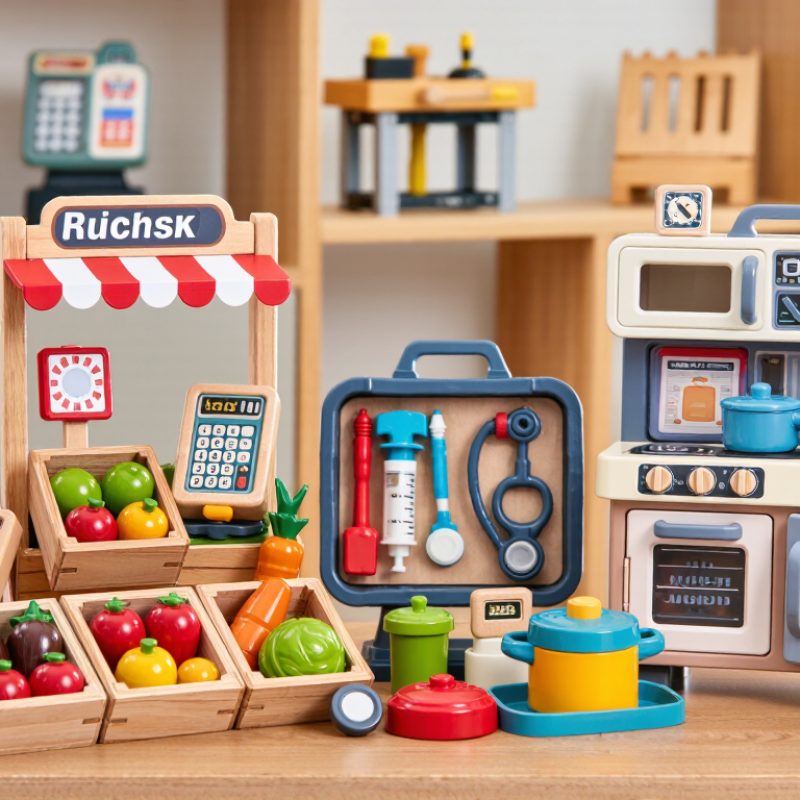
What are pretend play toys? They are playthings that let children act out familiar roles and everyday scenes. A wooden market stall, toy doctor’s kit, or miniature kitchen can turn ordinary play into storytelling. These toys may encourage language, imagination, and social interaction, though their value depends on a child’s interests and how adults support play. No toy works for every child.

This guide introduces ten China-based manufacturers associated with pretend play products and explains what buyers can examine before making contact. Rather than treating “top” as a guaranteed ranking, it considers practical factors such as product range, materials, customization options, production information, and the clarity of a supplier’s communication. A colorful catalog is only a starting point. Ask for current specifications, sample details, packaging information, and relevant quality documentation; then compare the answers against your own needs. Check whether a company makes the products itself or coordinates production through other facilities. That distinction can affect lead times and oversight. Public information may be incomplete or change over time, so verify important claims directly with each manufacturer. Some details will remain unclear. That deserves a second look. The sections ahead offer a useful shortlist, not a substitute for careful supplier checks.
What Are Pretend Play Toys Top 10 China Manufacturers?

What Pretend Play Toys Are and How Children Use Them

What Are Pretend Play Toys Top 10 China Manufacturers?

What Pretend Play Toys Are and How Children Use Them

Pretend play toys help children act out familiar or imagined roles. A toy kitchen, play food, doctor kit, or animal figures can become props for a restaurant, clinic, or forest adventure. Children assign meaning to objects and negotiate roles with playmates. A wooden block might become a phone. That flexibility is the point. Through make-believe, children practice vocabulary, sequencing, emotional expression, and cooperation. However, one play session cannot establish a child’s developmental level.

The U.S. Centers for Disease Control and Prevention lists using objects to pretend, such as feeding a block to a doll, as a 30-month developmental milestone in its 2022 checklist. The American Academy of Pediatrics’ 2018 clinical report, “The Power of Play,” describes play as supporting language, social-emotional skills, and executive function. These sources frame pretend play as a valuable opportunity, not a guaranteed lesson. Adults can offer a few safe, age-appropriate props, then follow the child’s story instead of correcting every detail. Play can be noisy and uneven. That is normal.

Tips: Choose sturdy, open-ended toys with easy-to-clean surfaces. Ask, “What happens next?” rather than supplying the plot. Let children change the game or decline a role. Keep small pieces away from children who may put them in their mouths, and check age guidance.

Main Categories of Pretend Play Toys Made in China

Main Categories of Pretend Play Toys Made in China

China-made pretend-play toys commonly include play kitchens and food sets, doctor kits, tool benches, toy shops, dolls with accessories, and dress-up sets. China Customs figures cited by the China Toy and Juvenile Products Association put toy exports at about US$40.6 billion in 2023. This figure covers toys broadly, not pretend-play products alone, but it reflects the depth of the country’s toy manufacturing supply chain.

For buyers, each category has distinct design needs. A kitchen set may combine molded cookware, play food, and small accessories; a doctor kit needs easy-to-hold tools and a sturdy case. Shop sets often pair pretend money with a toy scanner or checkout counter. Dolls and dress-up products rely on fabric details, fasteners, and accessory fit. Material consistency and clean finishing matter. A colorful sample can still hide loose connections or rough edges. One gap remains: product catalogs often show features better than they explain how children use them in play.

Tips: Ask suppliers for category-specific samples, material details, and checks on small components. Test doors, handles, and clips by hand. Compare the finished sample with the approved specification before placing a larger order.

How China’s Pretend Play Toy Industry Is Organized

What Are Pretend Play Toys Top 10 China Manufacturers?

How China’s Pretend Play Toy Industry Is Organized

China’s pretend-play toy industry is better understood as a network than a single production line. Guangdong has dense toy-making clusters, including Chenghai in Shantou, while Zhejiang and Jiangsu also support manufacturing and supply businesses. A pretend kitchen may involve separate suppliers for molded parts, printed panels, miniature utensils, assembly, and packaging. Not a neat chain. Some factories handle several stages; others depend on nearby specialist vendors.

The China Toy and Juvenile Products Association’s 2023 industry summary, using customs data, reported toy exports of about US$39.8 billion. This covers toys broadly, not pretend-play products alone. UN Comtrade’s HS 9503 category likewise groups many toy types, so it cannot show this niche’s exact export value. Buyers should treat broad market figures as context, not a ranking of manufacturers.

In practice, sourcing often combines factory audits, sample checks, and confirmation of who controls tooling and quality inspections. A supplier may describe itself as a manufacturer while outsourcing key steps. That distinction is easy to miss. Cluster maps help locate capabilities, but they do not prove capacity, workmanship, or delivery reliability.

Profiles of 10 Pretend Play Toy Manufacturers in China

Profiles of ten pretend-play toy manufacturers in China should compare capabilities, not just catalog size. A useful selection includes makers of play kitchens, miniature food, doctor kits, tool benches, shop counters, doll accessories, dress-up sets, farm playsets, construction scenes, and role-play furniture. These categories reveal different production needs. A kitchen set may require sturdy hinges and smooth edges, while tiny food pieces need clear color separation. Ask how each factory handles material checks, mold revisions, sample approval, and final inspection. A polished sample matters, but repeat consistency matters more.

Tips: Request recent product photos, a sample, and written specifications. Check whether age guidance and packaging details are clear. Small gaps in documentation can become large sourcing headaches.

Treat each profile as a starting point, not a guarantee. Some suppliers may offer several categories, and catalogs can overlap. Compare their actual equipment, customization limits, lead times, and communication practices. Ask for evidence of quality procedures rather than relying on broad claims. Also discuss replacement parts and packaging protection; a pretend-play set can arrive with scuffed panels or missing pieces. One imperfect point: online profiles rarely show how a supplier handles a production problem. A direct sample review and a specific follow-up question often reveal more than a long capability list.

What Are Pretend Play Toys Top 10 China Manufacturers? – Profiles of 10 Pretend Play Toy Manufacturers in China

These are anonymized capability profiles, not a verified company ranking or claims about specific suppliers. Product materials and production capabilities vary by factory and item; confirm them directly with each supplier.

Profile Pretend-Play Focus Common Product Examples Materials Commonly Used Buyer Checks Relevant Safety Considerations
01 · Toy kitchen and food sets Role-play kitchens, cooking accessories, and play food Play cookware, utensils, food pieces, miniature appliances Plastic, printed paper or cardboard, and sometimes wood Check accessory count, small-part dimensions, finish quality, and whether food pieces are compatible with the intended age grade. Assess small parts, sharp edges, accessible fasteners, and material or coating requirements for the destination market.
02 · Doctor and healthcare play sets Imaginative medical-care play Toy stethoscopes, thermometers, cases, and examination tools Plastic, fabric storage cases, and printed packaging Verify that accessories are nonfunctional toys, contain no hazardous pointed parts, and are supplied with clear age grading. Review choking hazards, mechanical safety, and any battery safety requirements if electronic features are included.
03 · Toy tool and workshop sets Construction and home-repair role play Toy tools, workbenches, safety-themed accessories, and tool cases Plastic, wood, and, in some designs, textile components Inspect edges, joints, stability of workbenches, and the durability of removable tool accessories. Check mechanical and physical safety, small components, and applicable toy-safety requirements for the sales market.
04 · Dollhouse and miniature-room sets Home, family, and interior-design play Dollhouses, miniature furniture, room accessories, and play figures Wood, engineered wood, plastic, and printed paper elements Confirm assembled dimensions, packaging protection, assembly instructions, and compatibility between figures and furniture. Assess stability, pinch points, small parts, coatings, and applicable chemical limits for the target market.
05 · Dress-up and costume accessories Character, occupation, and performance role play Costume accessories, toy badges, capes, masks, and play props Textiles, plastic, elastic, and printed components Request fabric and accessory specifications; check seams, fastenings, sizing, and washing or care information where relevant. Review flammability rules applicable to the product category, strangulation risks from cords, and small detachable parts.
06 · Grocery store and market sets Shopping, selling, and cashier role play Play cash registers, baskets, toy money, food items, and counters Plastic, paper or cardboard, and occasionally wood Check printed-content accuracy, accessory quantities, cash-register functions, and battery inclusion or exclusion. For electronic versions, verify battery-compartment security and applicable electrical and toy-safety testing.
07 · Play tents and themed play environments Enclosed imaginative-play spaces and role-play scenes Play tents, fabric shops, pop-up houses, and themed fabric panels Textile fabric, flexible frames, plastic connectors, and mesh Confirm assembled dimensions, setup instructions, frame construction, ventilation features, and storage method. Evaluate stability, accessible cords or loops, fabric flammability requirements, and intended-use warnings.
08 · Wooden role-play toys Durable, open-ended role-play products Wooden kitchens, food sets, shop counters, and toy tools Solid wood, engineered wood, water-based or other specified finishes, and mixed materials Ask for wood and coating specifications; inspect sanding, joints, finish consistency, and packaging protection. Check splinters, edges, coatings, small parts, and applicable chemical and physical safety requirements.
09 · Plush and fabric role-play toys Soft-character play and pretend-care activities Plush food, soft dolls, fabric accessories, and play-care items Textile outer fabric, filling, thread, and sometimes plastic components Verify seam strength, filling details, labeling, care instructions, and whether attached accessories are securely fixed. Review small-part attachment, seam integrity, textile requirements, and any applicable flammability or chemical rules.
10 · Electronic and interactive role-play toys Role-play products with lights, sounds, or interactive functions Electronic cash registers, toy phones, interactive tools, and play appliances Plastic housings, electronic components, wiring, and battery compartments Confirm power source, operating instructions, sound and light functions, battery policy, and component replacement support. Check battery access and retention, electrical and mechanical safety, and destination-market requirements for electronic toys.

Standards depend on the product and destination market. Examples include EN 71 for toys sold in the European market, ASTM F963 and applicable CPSIA requirements in the United States, and GB 6675 in China. Confirm the current applicable rules and request product-specific test reports; a standard reference does not imply that any profile above holds a certification.

How to Evaluate Pretend Play Toy Manufacturers in China

Choosing a pretend-play toy manufacturer in China takes more than comparing catalogue photos. Check whether its product range fits your needs: a fabric doctor’s kit, a wooden play kitchen, and a plastic tool set require different production skills. Ask how designs are reviewed for the intended age group. Small details matter. Inspect sample seams, smooth edges, paint coverage, and parts that might loosen during repeated play.

Ask to see current quality records and test reports relevant to your destination market. Confirm who conducts checks, how often they inspect production, and what happens when a sample fails. A polished prototype is useful, but it cannot prove that every production batch will match. Request a sample made with the materials and processes planned for your order. Then compare it with the approved version after production begins. This step takes time. It can prevent avoidable surprises.

Evaluate communication as carefully as price. Can the factory explain minimum order quantities, lead times, packaging options, and changes to artwork in clear terms? Ask for references or a live video walkthrough of the relevant production area. Note whether answers are specific or vague. No checklist catches everything; mine would not. A supplier may still be a good fit despite one imperfect answer, but recurring gaps in documentation or follow-up deserve closer scrutiny.

How to Evaluate Pretend Play Toy Manufacturers in China

Suggested evaluation weighting for comparing suppliers—not survey results or ratings of specific manufacturers.

How to use it: Request supporting records for each criterion, including applicable toy-safety test reports, quality-control procedures, production samples, and export documentation. Adjust the weights to fit your product and target market.

FAQS

What types of pretend-play toys are commonly made in China?

Common categories include play kitchens, food sets, doctor kits, tool benches, shop counters, dolls, dress-up sets, and farm playsets. Each needs different materials and production skills.

What should buyers check in a play kitchen sample?

Test hinges, doors, handles, and clips by hand. Look for smooth edges and sturdy connections. Small defects matter.

How can buyers assess a doctor kit?

Check whether the tools are easy to hold and the case feels sturdy. Ask about materials and inspect small components closely.

Do toy export figures show pretend-play exports alone?

No. The cited 2023 figure of about US$40.6 billion covers toys broadly, not pretend-play products alone.

Why request a production-representative sample?

A polished prototype may use different materials or processes. Compare a sample made for the planned order with the approved specification. This takes time.

What quality information should buyers request?

Ask for relevant test reports and current quality records. Clarify who inspects production, how often checks happen, and what follows a failed sample.

Which details should buyers confirm before placing an order?

Confirm minimum order quantities, lead times, packaging options, and artwork changes. Discuss replacement parts and protection against scuffed panels or missing pieces.

Are online supplier profiles enough to judge a manufacturer?

No. Request recent photos, a sample, or a live video walkthrough of the relevant production area. Profiles rarely reveal how problems are handled. Some gaps remain.

Conclusion

What are pretend play toys, and how do they support children’s learning and creativity? This article explains how children use role-play toys to imitate everyday experiences, explore different roles, and develop communication, imagination, and problem-solving skills. It introduces major categories made in China, including play kitchens, toy food, doctor sets, tool sets, doll accessories, and shops, showing how these products can encourage different kinds of imaginative play.

The article also outlines how China’s pretend play toy industry is organized, from product development and component sourcing to manufacturing and quality management. It presents profiles of 10 manufacturers in China, focusing on their product capabilities and areas of specialization without endorsing any particular company. Finally, it offers practical criteria for evaluating potential suppliers, such as production experience, material and safety controls, customization options, communication, and consistency. Together, these sections provide a clear starting point for understanding the product category and comparing manufacturers.

Aria

Aria

Aria is a dedicated marketing professional with a deep passion for innovative strategies and a keen understanding of our company's product offerings. With a wealth of experience in the industry, Aria excels at crafting engaging content that highlights the unique features and benefits of our......