How can pretend play toys support classroom learning? This question matters in classrooms where children learn through movement, conversation, and shared imagination. Pretend play toys can transform a corner into a shop, clinic, kitchen, or construction site. A child counting wooden coins practices early mathematics. Another child writes a menu and experiments with new vocabulary. These moments connect abstract lessons with familiar experiences.
Teachers can use pretend play to support language, cooperation, problem-solving, and emotional development. During a pretend restaurant activity, children may take turns, negotiate roles, and explain their choices. A teacher can introduce words such as “estimate,” “ingredient,” or “customer” without interrupting the play’s natural flow. Research on play-based learning also suggests that guided play can strengthen engagement when adults provide suitable materials and thoughtful questions. The quality of guidance matters.
Small details create meaningful learning.
However, pretend play is not automatically educational. Some toys may encourage repeated actions without conversation or creativity. A busy classroom can also make shared play difficult. Teachers need to observe carefully, adapt activities, and include children who prefer quieter roles. This requires professional judgment rather than a fixed script. One child may enjoy acting as a doctor, while another may learn more by organizing the medical tools. Both responses deserve attention.
Effective practice combines child-led exploration with clear learning intentions. Teachers can document children’s language, cooperation, and emerging understanding through brief notes. Families may also share cultural experiences that improve the play setting. Pretend play toys support classroom learning best when they reflect children’s lives, invite flexible thinking, and remain connected to purposeful teaching.
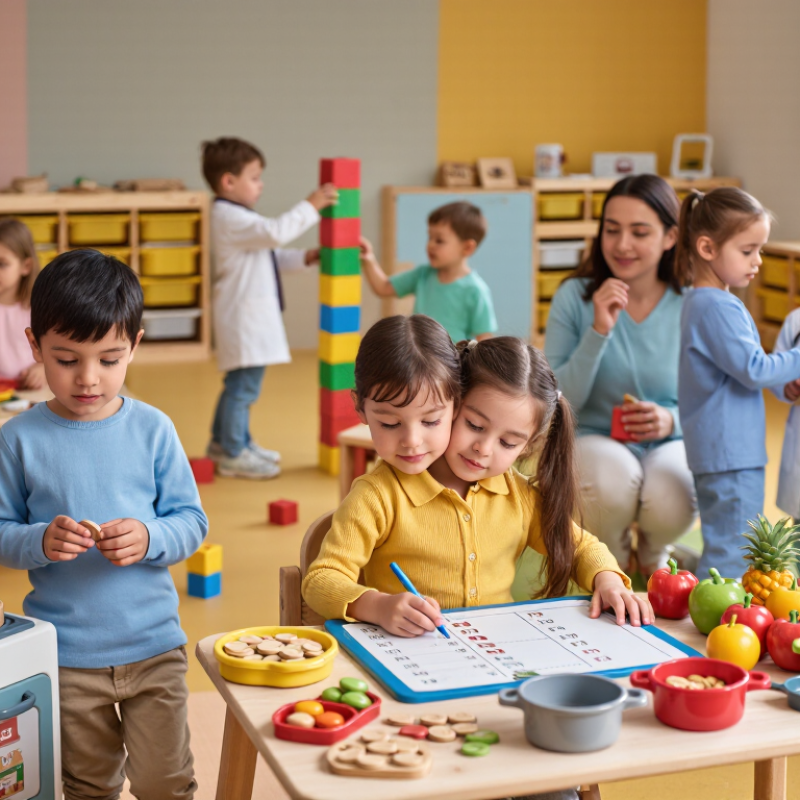
Pretend-play toys can turn classroom roles into practical learning opportunities. A small shop corner gives children reasons to count objects, compare prices, and use polite language. One child becomes the cashier, while another chooses items and asks questions. These roles make early mathematics and communication feel purposeful, not forced. Teachers can listen for vocabulary, cooperation, and problem-solving during play. A child who struggles during worksheets may confidently explain a purchase in this setting.
A classroom clinic, kitchen, or construction area can also develop social understanding. Children practise taking turns, following simple procedures, and responding to unexpected problems. “The bridge fell.” What happens next? Such moments encourage flexible thinking. Educators should avoid controlling every scene. Open-ended materials often support richer stories than toys with only one correct use. Still, pretend play is not automatically effective. Some children may dominate the roles, while quieter children watch from the edge. Teachers need to rotate responsibilities and offer gentle prompts. My own reflection is that too much adult direction can make play feel like another lesson.
Tips: Add picture labels, paper money, clipboards, and safe everyday objects. Keep role choices visible. Observe before stepping in. Ask, “What could we try now?” rather than solving the problem immediately. Change the setting when interest fades, but keep familiar roles for children who need confidence. Record brief observations after play, including one skill noticed and one area needing support. This keeps classroom decisions grounded in real behaviour.
Children name objects, explain ideas, and practise conversations during activities like preparing a pretend meal.
It may encourage sharing, turn-taking, and role negotiation. A costume alone cannot guarantee cooperation.
Children may change plans, wait, solve problems, and consider what another character knows.
Offer open-ended props, observe quietly, and ask, “What should happen next?” A cardboard box might become a bus.
They can notice counting, sorting, questioning, language use, and problem-solving in real classroom situations.
Keep brief notes about actions and words. Record evidence, not just impressions.
Choose one learning goal and observe children across several sessions. Look for patterns over time.
Not necessarily. Silence may show concentration, unfamiliarity, or a language difference. Interpretation can be wrong.
Compare notes with a colleague and revisit the skill in another setting. Busy classrooms can hide important details.
No clear guarantee exists. Learning often depends on conversation, teacher support, and children’s participation.
Pretend-play toys can turn ordinary classroom activities into meaningful learning opportunities by allowing children to explore familiar roles, situations, and ideas through imaginative play. In the first five years, play-based experiences can support early development by giving children chances to communicate, experiment, and make sense of the world. When children act out stories or everyday scenarios, they practice new vocabulary, listen to others, share ideas, and collaborate. They also learn to manage emotions, take turns, and adjust their plans when play changes.
Understanding how can pretend play toys support classroom learning also means looking beyond the toys themselves: thoughtful teacher guidance and observation matter. Educators can notice how children use language, solve problems, negotiate roles, and apply classroom concepts during play. These observations help teachers recognize individual strengths and needs, then plan activities that extend learning without taking away children’s initiative. While pretend play is not a substitute for every form of instruction, it can create a flexible, engaging setting for developing social, language, and self-regulation skills.

 Angeles Toys
