Choosing engaging pretend play toys requires more than bright colors or popular characters. Children need objects that invite action, conversation, and repeated discovery. In early learning settings, I have seen a wooden kitchen set become a restaurant, clinic, or family home within minutes. A fabric bag can become a doctor’s kit, shopping basket, or travel case. These simple transformations show how open-ended toys support imagination without prescribing one correct story.
This guide examines what factors make pretend play toys engaging for children, including realistic details, flexible uses, sensory appeal, and age-appropriate challenges. A toy telephone may encourage turn-taking and language, while a toy tool bench can strengthen planning and hand coordination. Durable construction also matters. Loose handles, sharp edges, or difficult fasteners quickly interrupt play and may create safety concerns. Reliable choices should use non-toxic materials, smooth surfaces, and clear age guidance from established manufacturers.
However, no toy guarantees meaningful engagement. Some carefully designed products remain untouched when adults control every action. I have also noticed that too many toys can scatter attention across the room. Children often play longer when they have space, time, and permission to change the rules. Caregivers should observe rather than constantly direct. Watch the child’s hands, questions, and repeated choices. Those details reveal whether a pretend play toy genuinely supports confidence, social interaction, and creative thinking. The best choice may look ordinary, but it keeps producing new stories.
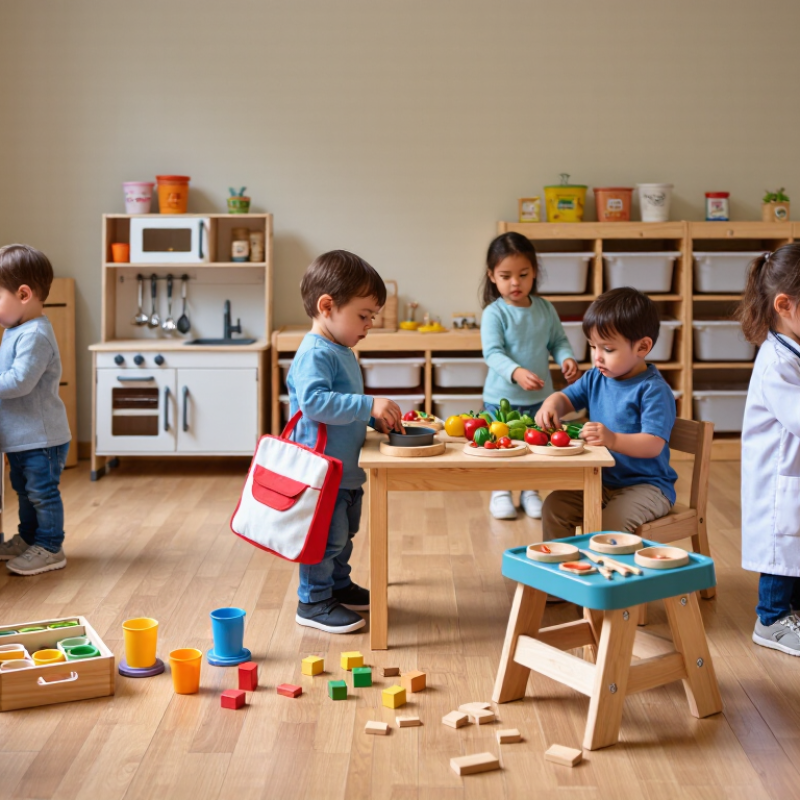
Pretend play toys invite children to act out familiar experiences. A toy kitchen can become a busy café. A toy doctor set can turn a sofa into a clinic. These simple objects support symbolic thinking, language, and emotional expression. Children practice taking turns, solving problems, and understanding other people’s feelings. They also test real-life roles in a safe setting. A child may comfort a stuffed animal before asking for comfort themselves.
Choose toys that leave room for imagination. Open-ended items, such as fabric food, cardboard boxes, play tools, or dress-up clothes, can support many stories. Look for sturdy materials, smooth edges, and age-appropriate parts. Toys should be easy to hold and clean.
Avoid selecting only realistic sets. A plain scarf might become a superhero cape, a blanket, or a river. The perfect toy does not exist. Children may ignore an expensive set and prefer an empty container.
Tips: Watch what your child repeats during daily play. Choose toys connected to those interests. Add a few flexible accessories instead of filling the whole room. Ask gentle questions, such as “Who needs help?” Then pause and let the child lead. For children under three, check age guidance carefully and avoid small detachable parts. Replace damaged pieces promptly. Feedback from teachers, caregivers, and the child can improve future choices.
How to Choose Engaging Pretend Play Toys for Children?
How to Match Pretend Play Toys With a Child’s Age and Abilities
Pretend play works best when the toy matches a child’s current abilities, not only their age. For toddlers, choose lightweight objects with simple actions, such as stacking cups, fabric food, or large pretend utensils. These support grasping, naming, copying, and short bursts of attention. Avoid complicated sets with tiny parts. They may create frustration instead of play.
Children aged three to four often enjoy role-based toys, including play kitchens, animal figures, or doctor tools. Look for open-ended pieces that allow several stories. A child with developing language may benefit from picture labels and familiar objects. Older children can manage smaller accessories, simple rules, and longer storylines. However, age ranges are guides, not tests. Abilities, interests, sensory needs, and confidence can differ widely.
Tips: Watch how the child plays before buying more. Can they hold, sort, or connect the pieces comfortably? Offer one challenge at a time. For a child who avoids noise, choose quiet materials and soft textures. For limited hand strength, select larger handles and lightweight parts. I once offered an elaborate set too early, expecting creativity; the child needed fewer pieces and more adult modeling. That mistake reminded me to observe first. Check construction, washable surfaces, secure parts, and clear safety guidance before use. Supervise younger children closely, especially around small accessories.
Use age ranges and developmental abilities as practical guidelines. Children develop at different rates, so observe the child’s interests, coordination, communication, and need for adult support.
| Suggested Age | Typical Abilities to Consider | Suitable Pretend Play Toys | Skills Supported Through Play | Features That Encourage Engagement | Safety and Supervision Guidance |
|---|---|---|---|---|---|
| 12–24 months | Begins simple imitation, uses basic gestures, explores objects with hands, and may follow short one-step directions. | Soft dolls, large toy telephones, chunky toy food, simple cups, large washable vehicles, and sturdy push-along toys. | Imitation, early communication, object recognition, hand-eye coordination, and simple cause-and-effect understanding. | Large easy-grip parts, familiar everyday themes, realistic but uncomplicated sounds, and actions such as feeding, talking, or pushing. | Choose toys without small detachable parts, button batteries, or accessible magnets. Supervise children who still mouth objects. |
| 2–3 years | Can engage in short pretend sequences, name familiar objects, make simple choices, and use basic tools with increasing control. | Play kitchens with oversized accessories, doctor kits with simple tools, animal figures, dress-up accessories, and basic cleaning sets. | Vocabulary, sequencing, fine-motor control, self-help concepts, emotional expression, and early problem-solving. | Open-ended pieces, familiar routines, clear visual details, and accessories that can be used in more than one way. | Avoid long cords, sharp edges, and accessories that can become choking hazards. Check that dress-up items do not restrict vision or movement. |
| 3–4 years | Creates short storylines, takes on simple roles, combines several objects, and increasingly plays alongside or with other children. | Pretend food sets, construction-worker or veterinarian sets, puppets, costumes, dollhouses with large figures, and role-play vehicles. | Cooperative play, narrative language, perspective-taking, planning, categorization, and hand strength. | Multiple compatible accessories, role cards, movable features, character variety, and toys that support both independent and shared play. | Look for stable construction and non-toxic, durable materials. Adult guidance may help children use medical or community-role themes appropriately. |
| 4–5 years | Can sustain imaginative play for longer periods, negotiate roles, follow several steps, and invent more detailed stories. | Market and restaurant sets, dress-up costumes, puppet theaters, building-and-rescue themes, dollhouses, and realistic household props. | Language development, social negotiation, early numeracy, sequencing, creativity, and emotional understanding. | Interchangeable parts, pretend money with simple numbers, menus or signs, storytelling prompts, and flexible role combinations. | Select age-appropriate props and explain that toy tools, food, and medicines are for pretend use only. Monitor play involving masks, capes, or small accessories. |
| 5–7 years | Develops more complex plots, understands rules, uses writing or drawing in play, and can manage shared projects with peers. | Advanced shop or café sets, science-and-exploration role-play, community-helper kits, puppet sets, model-building themes, and adaptable costumes. | Planning, collaboration, literacy, numeracy, critical thinking, creativity, and flexible problem-solving. | Props that encourage research, maps, labels, checklists, story challenges, modular components, and opportunities to change roles. | Review small parts and project tools for the child’s maturity level. Encourage safe movement and clear boundaries when role-play includes action themes. |
| 7 years and older | Can plan multi-step scenarios, understand different viewpoints, follow agreed rules, and combine imagination with practical skills. | Complex building-and-role-play systems, historical or cultural storytelling props, theater kits, craft-based pretend businesses, and strategy-focused scenarios. | Leadership, communication, research, creativity, decision-making, collaboration, and sustained attention. | Open-ended systems, customizable characters, written instructions, collaborative missions, and realistic challenges that do not require one correct outcome. | Check product instructions and materials carefully, especially for craft tools, electronics, projectiles, or components intended for older children. |
How to Choose Engaging Pretend Play Toys for Children?
Pretend play toys should invite action, not simply decorate a shelf. Look for open-ended features, such as empty containers, adjustable tools, washable food pieces, and figures with flexible roles. A cardboard shop can become a bakery, clinic, or spaceship. Children need choices. They also need room to change the story.
The 2022 global Play Well Study, covering more than 57,000 parents and children, reported that 91% of parents viewed play as essential. This supports choosing toys that encourage shared storytelling and active movement. The American Academy of Pediatrics also recommends simple, hands-on toys that support caregiver-child interaction. Avoid excessive sounds and fixed scripts. A toy that speaks every line may reduce conversation. Quiet can be useful.
Watch for safe size, sturdy construction, and realistic but non-limiting details. A toy stethoscope can encourage caring, questioning, and role switching. Add fabric scraps, paper tickets, or a small basket nearby. These inexpensive additions often extend play. However, too many accessories may overwhelm younger children. I would not assume the largest set creates the richest imagination. Sometimes, one wooden spoon works better than twenty plastic tools. Preferences vary, and adults can misread silence as boredom. Observe the child’s hands, words, and repeated choices before replacing the toy.
Which toy features encourage imagination and active participation?
This evidence-informed design rubric rates common pretend-play features from 1 to 5. Open-ended use, child control, flexible roles, and opportunities for social interaction tend to support richer imagination and more active participation than toys with only one fixed outcome.
Engaging pretend play begins with safe, dependable materials. Check every edge, hinge, handle, and fastener before buying. Surfaces should feel smooth, without splinters, sharp corners, or loose decorative pieces. For younger children, avoid small parts that could fit inside a household toilet-paper tube. That simple test is useful, though it cannot replace careful supervision.
Material labels deserve close attention. Prefer clearly identified wood, food-contact-safe silicone, or sturdy, non-brittle plastic. A strong toy should resist bending, cracking, and repeated cleaning. Look for secure seams and evenly applied, odor-free finishes. If paint flakes after a few uses, the toy has failed its first real-world test. I once trusted a bright finish too quickly. It looked excellent in the shop, but daily handling revealed weak corners.
Durability also affects safety. A broken cup, cracked pretend tool, or detached wheel can create hazards during imaginative play. Choose pieces that match a child’s strength and play habits. Test doors, knobs, and moving parts gently before purchase. Check whether the toy remains stable on a floor or low table. Recognized safety testing can provide useful assurance, but parents still need regular inspections. Children play creatively, sometimes roughly. A careful choice today may need reconsideration next month.
How to Choose Engaging Pretend Play Toys for Children?
How to Choose Toys That Support Diverse Pretend Play Scenarios
Choose toys that can serve several purposes instead of one fixed role. A wooden spoon can become a microphone, medicine tool, or magic wand. A cloth bag might hold groceries, costumes, or rescue supplies. Open-ended pieces help children move between home, shop, clinic, space station, and outdoor adventure scenarios.
Observe how children actually play. Do they create stories with dolls, build shelters, or imitate daily routines? Select toys that match their interests while gently expanding them. Include different figures, clothing pieces, pretend food, containers, and simple building materials. These items can represent varied families, abilities, jobs, and cultures without forcing a single storyline. Safe materials, smooth edges, washable surfaces, and age guidance also matter. Professional early-childhood guidance consistently emphasizes safety, flexibility, and child-led play.
Tips: Choose toys with multiple uses. Leave room for imagination. Check parts regularly. Ask, “What could this become?” rather than giving directions. I have sometimes chosen attractive toys that children ignored because they allowed only one script. That mistake is useful. Watch, adjust, and accept that a quiet cardboard box may inspire more play than an elaborate set. Children may also combine unrelated objects, and that is not a problem. It can be the beginning of a richer story.
Choose open-ended toys that invite children to act, change roles, and create stories. Empty containers, adjustable tools, and washable food pieces work well. A cardboard box can become a shop, clinic, or spaceship. Quiet play matters too.
Simple toys leave space for children to invent details. A wooden spoon might become a microphone, medicine tool, or magic wand. One object can support many stories. More parts do not always mean richer play.
Look for flexible objects with several possible uses. A cloth bag can hold groceries, costumes, or rescue supplies. Figures with changeable roles encourage new storylines. Children should control the direction.
Use noisy or scripted features carefully. A toy that speaks every line may reduce conversation. Children need chances to ask questions and answer themselves. Silence can help.
Add fabric scraps, paper tickets, a basket, or cardboard signs. These details can turn a corner into a market or travel desk. Keep the collection small for younger children. Too many accessories may overwhelm them.
Watch the child’s hands, words, and repeated choices. Ask, “What could this become?” Avoid controlling every scene. Adults sometimes mistake quietness for boredom. That judgment may be wrong.
Check safe sizing, smooth edges, sturdy construction, and washable surfaces. Review small parts regularly. Follow the age guidance. Safe materials support longer, calmer play.
Offer varied figures, clothing pieces, containers, and pretend food. Let children combine these items freely. Do not force one storyline. Representation works best when play remains flexible.
Observe before replacing it. Children may prefer a quiet cardboard box or unrelated objects. I have chosen impressive toys that allowed only one script. That mistake needs reflection. Watch, adjust, and try again.
Pretend play toys are objects that help children act out real-life roles, invent imaginary worlds, and express ideas through hands-on play. They matter because they support language development, creativity, problem-solving, cooperation, emotional understanding, and growing independence. When choosing toys, adults should consider a child’s age, abilities, interests, and comfort level, selecting designs that are challenging enough to inspire learning without causing frustration. The key question is: what factors make pretend play toys engaging for children? Toys are most engaging when they invite active participation, offer flexible ways to play, include interesting details, and encourage children to make choices rather than follow only one fixed outcome.
Safety, durability, and material quality are also essential. Look for sturdy construction, smooth edges, secure parts, non-toxic materials, and designs suitable for the child’s developmental stage. Toys that can be combined, rearranged, or used in different roles allow children to create varied scenarios, such as cooking, caregiving, building, exploration, or community helpers. This flexibility keeps play fresh while supporting diverse experiences and inclusive imagination.

Angeles Toys